
Style Guides: The Art of “Beautiful Practicality” with Sarah Kate Price
September 21, 2026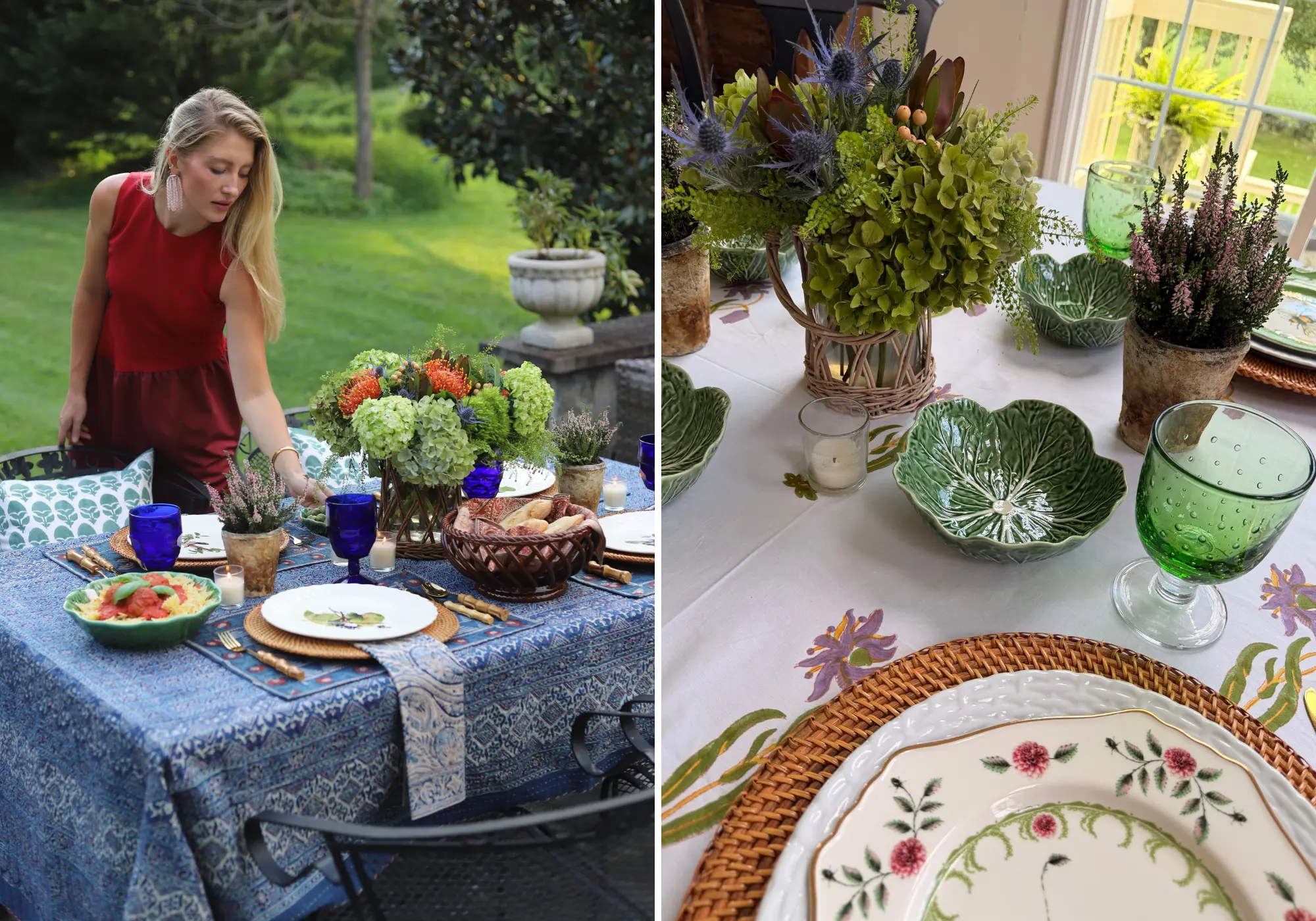
We are so pleased to have Sarah Kate Price, a stylist, content creator, and experiential designer, back as a second-time Style Guide! With several impressive projects under her belt, Sarah currently takes independent creative projects, while running a pajama line with her sister called West of Breakfast. Sarah now lives in McLean, Virginia with her husband and their two little girls.
We have been fans of her exuberant yet approachable lifestyle since she first reached out to us in 2020 to use our block printed bed sheets on the design competition show, “Stylish with Jenna Lyons”, in which Sarah was a finalist.
For her first Style Guide with us back in May of 2023, Sarah styled an effortlessly classic Spring Soiree with our colorful block printed linens. In this new Style Guide, Sarah beautifully incorporates the most ancient and quintessential Indian handmade textile styles ranging from kalamkari, ajrakh, and jahota indigo printing to hand stitched quilts and the evergreen block prints in both indoor and outdoor settings.
Looking at the chic settings Sarah has created for this Style Guide, you might think she has all the time in the world to “fuss around” making everything look beautiful. But as a busy mom of two young children, Sarah relies on her innate sense of design and style—and plenty of creative, practical ideas—to pull it all off. In this encore Style Guide, she shares her tips for creating a beautiful lifestyle with relative ease.
Follow along @sarahkateprice.
Enjoy a short clip of Sarah setting up the beautiful outdoor tablescape with our Samara handstitched tablecloth, Carnation and Delta indigo placemats, kalamkari napkins and Roza-Gulshan pillow covers!
Maintaining a beautiful and chic lifestyle with two little children
“I try to approach dinners with an added level of practicality and beauty in ways that make sense and pack a big impact”.
Q: We’re so excited to welcome you back for another Style Guide! How has your approach to decorating or entertaining evolved since we last caught up? As a busy mom of two little children, what are your tips for keeping your lifestyle and entertaining this beautiful and chic?
A: It’s so good to be back! Last time we did a style guide together, I was newly married without children, and in the time since then A LOT has changed. I had two babies in two years and my husband and I bought his childhood home from his parents, which we have been updating and making our own. Now that I have children, I’m amazed how much more planning needs to go into entertaining and life in general. With little hands following behind me and making messes quicker than I can clean them up, I’ve had to relinquish a certain amount of control over exactly how I entertain. But I figure, I would rather have the dinner party with a messy living room than not have it at all. I try to approach dinners with an added level of practicality and beauty in ways that make sense and pack a big impact.
Making monochromatic settings look storied and layered
“I love the Kalamkari napkins so much because they are such a stunning Indian design, but there is also something a bit “American West” about them. They feel unexpected, especially when paired with something like a chinoiserie”.
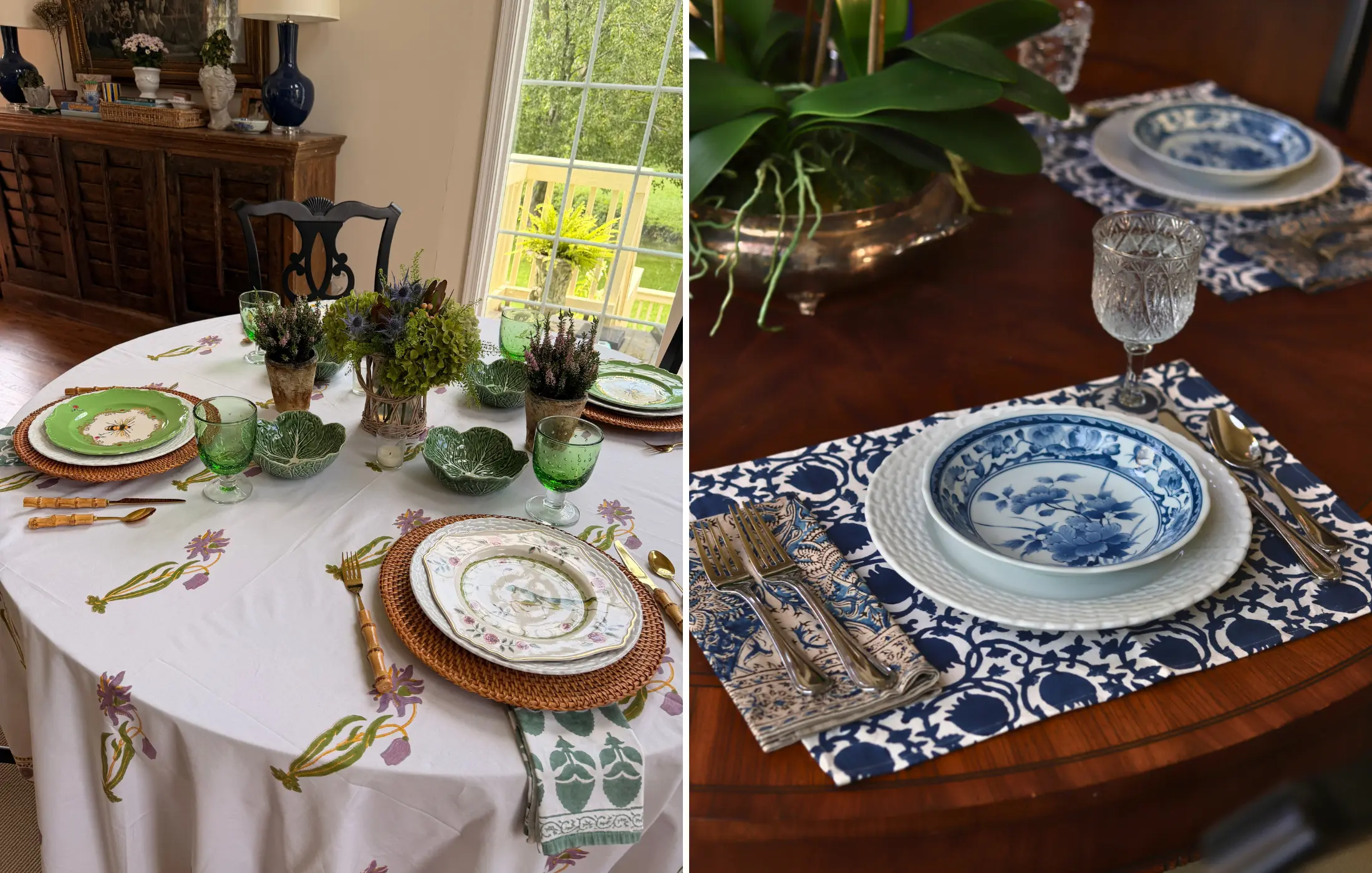
Q: We love how you created several monochromatic settings—pairing our Florence tablecloth and Gulshan napkins, two very different greens, and then bringing even more verdant shades into the mix; or pairing our blue Lotus placemats and Kalamkari napkins with more blues in the china. Yet neither feels too matchy-matchy. What’s your secret to mixing different shades of the same color while keeping it cohesive? Is there any color theory you swear by?
A: If I’m feeling lost, I usually gravitate back to monochrome, but monochrome does NOT mean all one shade or all one texture! On the contrary, for me monochromatic schemes are a way of highlighting texture and pattern and bringing it to the forefront. I don’t like when things feel too catalog, like everything is from the same place or same collection. For me, that’s the surest way for a design to feel stale. I love the Kalamkari napkins so much because they are such a stunning Indian design, but there is also something a bit “American West” about them. They feel unexpected, especially when paired with something like a chinoiserie. The pairing feels very storied and layered, which is always so important to me.
Creating a tablescape that easily transitions from daytime to evening
“Selecting and creating your own (floral) arrangement adds so much dimension and personality…The biggest difference I usually find myself making in a daytime versus nighttime tablescape is candlelight”.
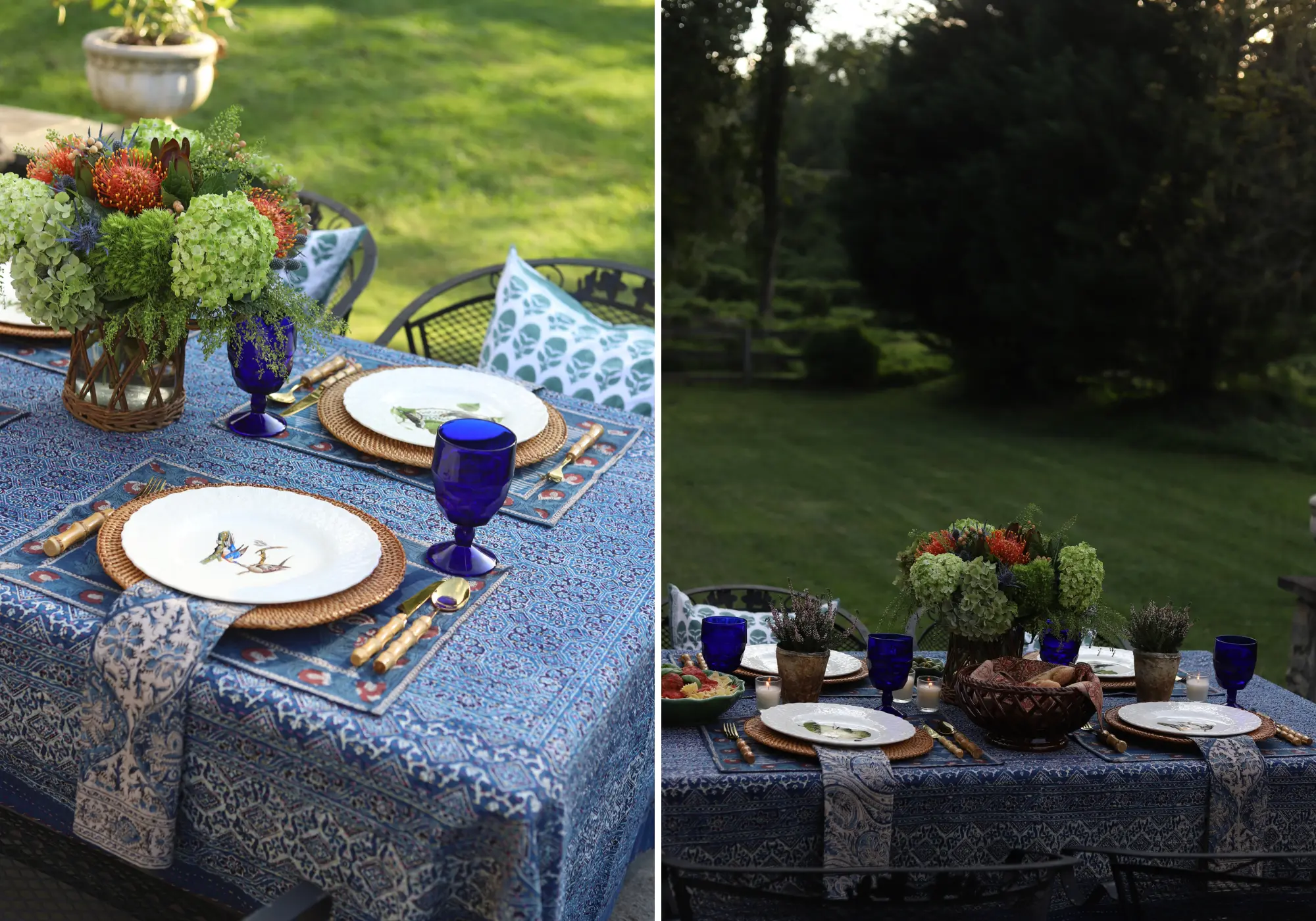
Q: The same tablescape feels equally perfect for a daytime meal and a more atmospheric evening setting, without changing a thing. What’s your secret to creating a setting that transitions so easily between the two? Are there certain elements you always include?
A: For me, beautiful florals make all the difference. I love supermarket flowers but I am decidedly against the readymade supermarket bouquet. Selecting and creating your own arrangement adds so much dimension and personality, and it doesn’t have to break the bank. I also like to subsidize with hydrangeas and greenery from my garden (a luxury I did not have when I lived in a 5th floor walkup in Manhattan). The biggest difference I usually find myself making in a daytime versus nighttime tablescape is candlelight. It always just adds such warmth to a table and makes it feel so much more romantic and intimate. Overhead lighting is strictly forbidden in my house (much to the chagrin of my husband), so lamps and candlelight really are key.
Here is another clip showing Sarah setting up a lovely weeknight dinner table with our Florence round tablecloth and Gulshan napkins.
Having a “collected” feel to a tablescape without overdoing it
“I love a healthy dose of practicality in a tablescape… relatively simple settings that don’t feel too rigid. I would rather have whimsy come from beautiful calligraphy on a place card, or a stunning fabric”.
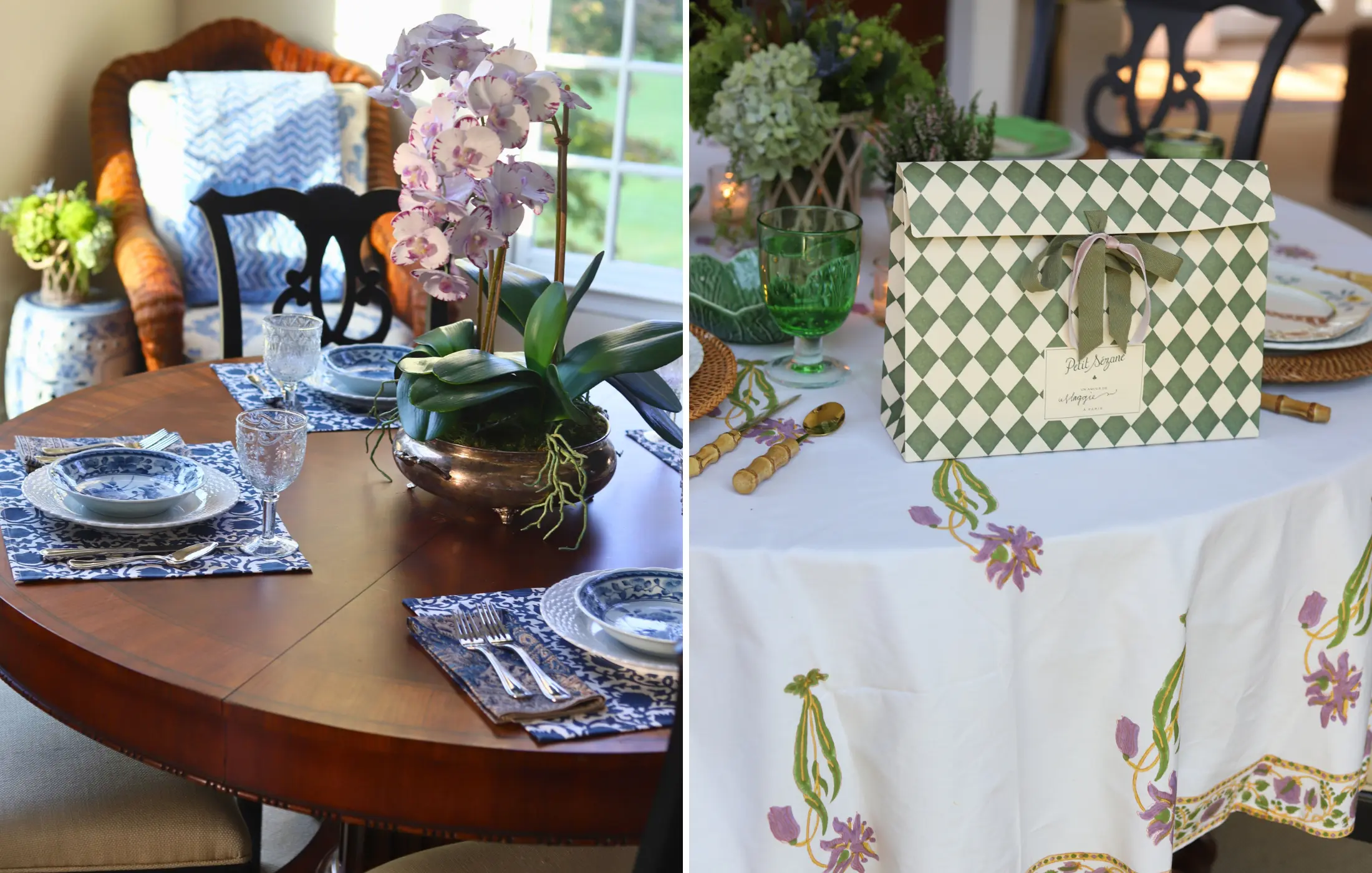
Q: Your tables always feel collected rather than overly “set”. How do you come up with the right mix of elements to create that sense of layering without overdoing it?
A: I love a healthy dose of practicality in a tablescape. I never want to do anything that is going to ruin the dining experience or take away the level of comfort that I want my guests to feel. Because of this, I tend to keep settings pretty organic: relatively simple settings that don’t feel too rigid. I add dimension through the dishes I use, floral arrangements, table linens, candles etc, but I tend to steer clear of things that feel fussy for fussiness’ sake (napkin swans are not in my wheelhouse). I would rather have whimsy come from beautiful calligraphy on a place card, or a stunning fabric.
Tips for affordably building a collection of interesting, varied pieces
“I love looking for things in thrift stores, antique fairs, estate sales, small businesses, and hand-me-downs from grandparents. Look for craftsmanship and quality materials in unexpected places. It’s a gold mine!”
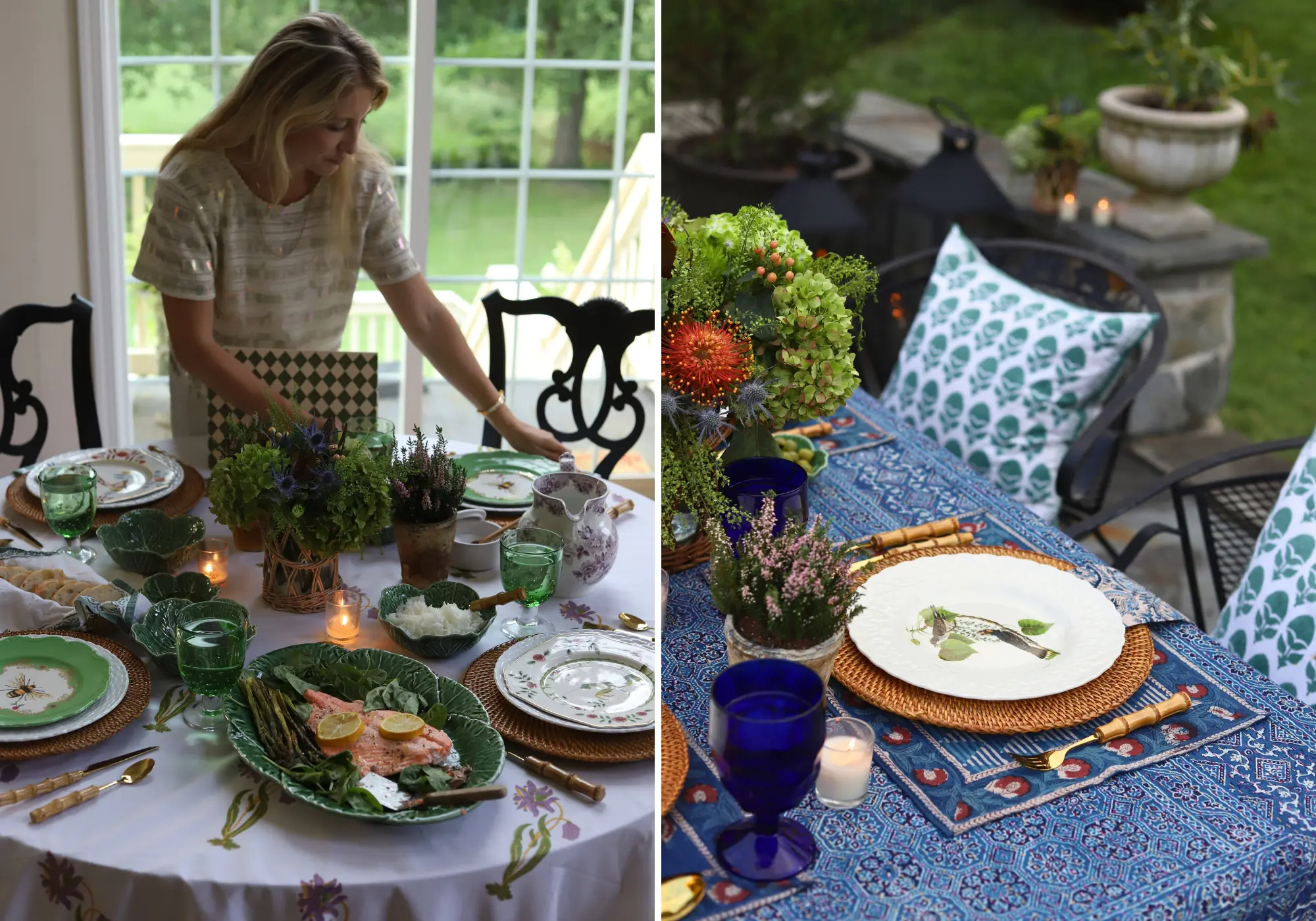
Q: What are your tips for building a collection of interesting, varied pieces without breaking the bank?
A: I’m going to say this loud for the people in the back: you CANNOT get a collection of interesting, varied pieces all at once. It takes time, but honestly that is part of the fun. I love looking for things in thrift stores, antique fairs, estate sales, small businesses, and hand-me-downs from grandparents. I’ve even found discarded furniture on the side of the road that I’ve incorporated into my home (after a thorough cleaning, of course). My number one tip is to look for craftsmanship and quality materials in unexpected places. I love sterling silver or silver-plate, crystal, bone china, hand-carved wood, and organic fibers. A lot of these pieces that were once viewed as incredibly formal, are now making their way to thrift stores because many people can’t wrap their heads around how to use them in their homes nowadays. It’s a gold mine!
Using things you love in different ways
“I love a piece that has multiple functions… using items in perhaps unexpected ways (like a quilt as a tablecloth), adds so much richness and creativity to a space”.
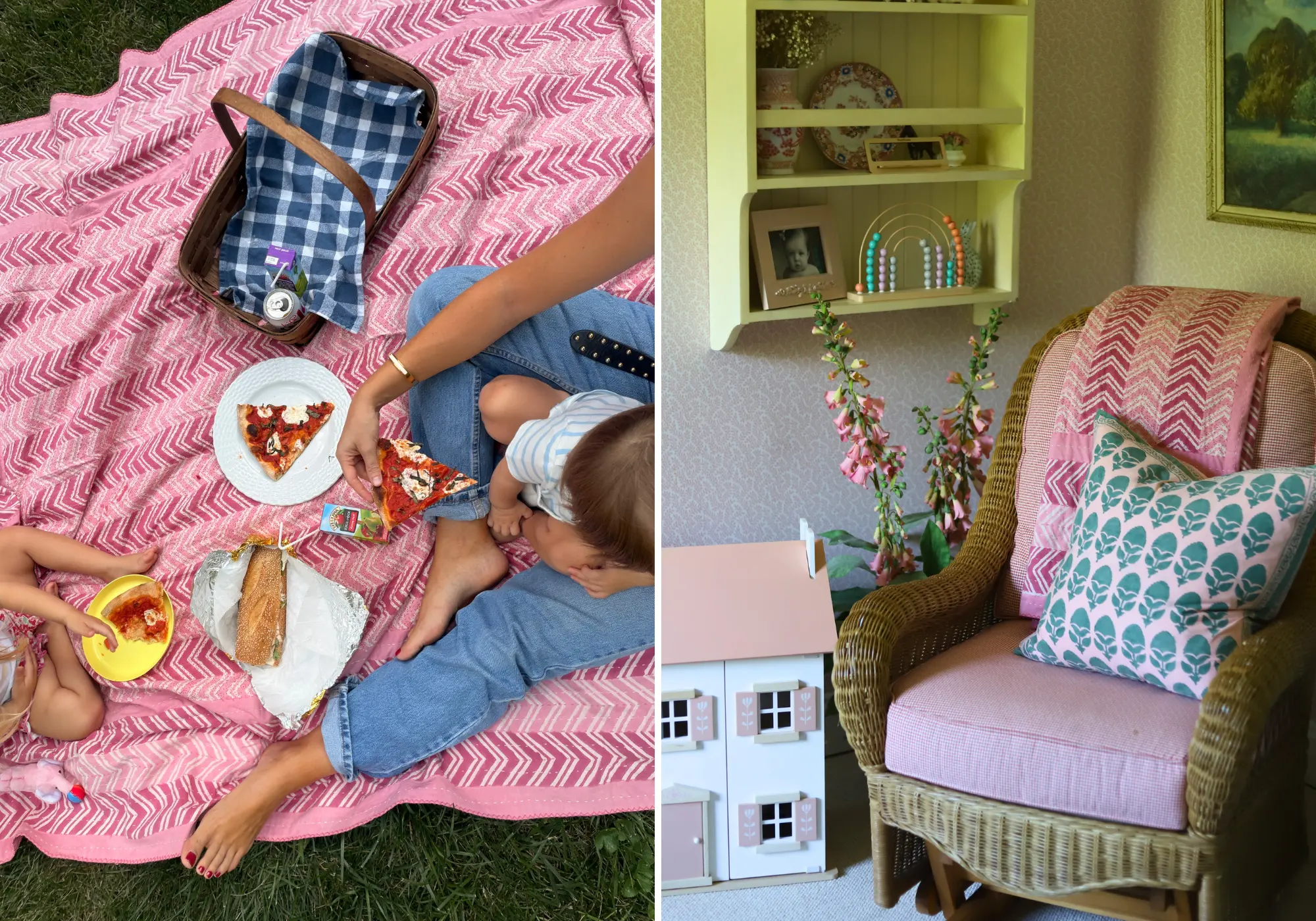
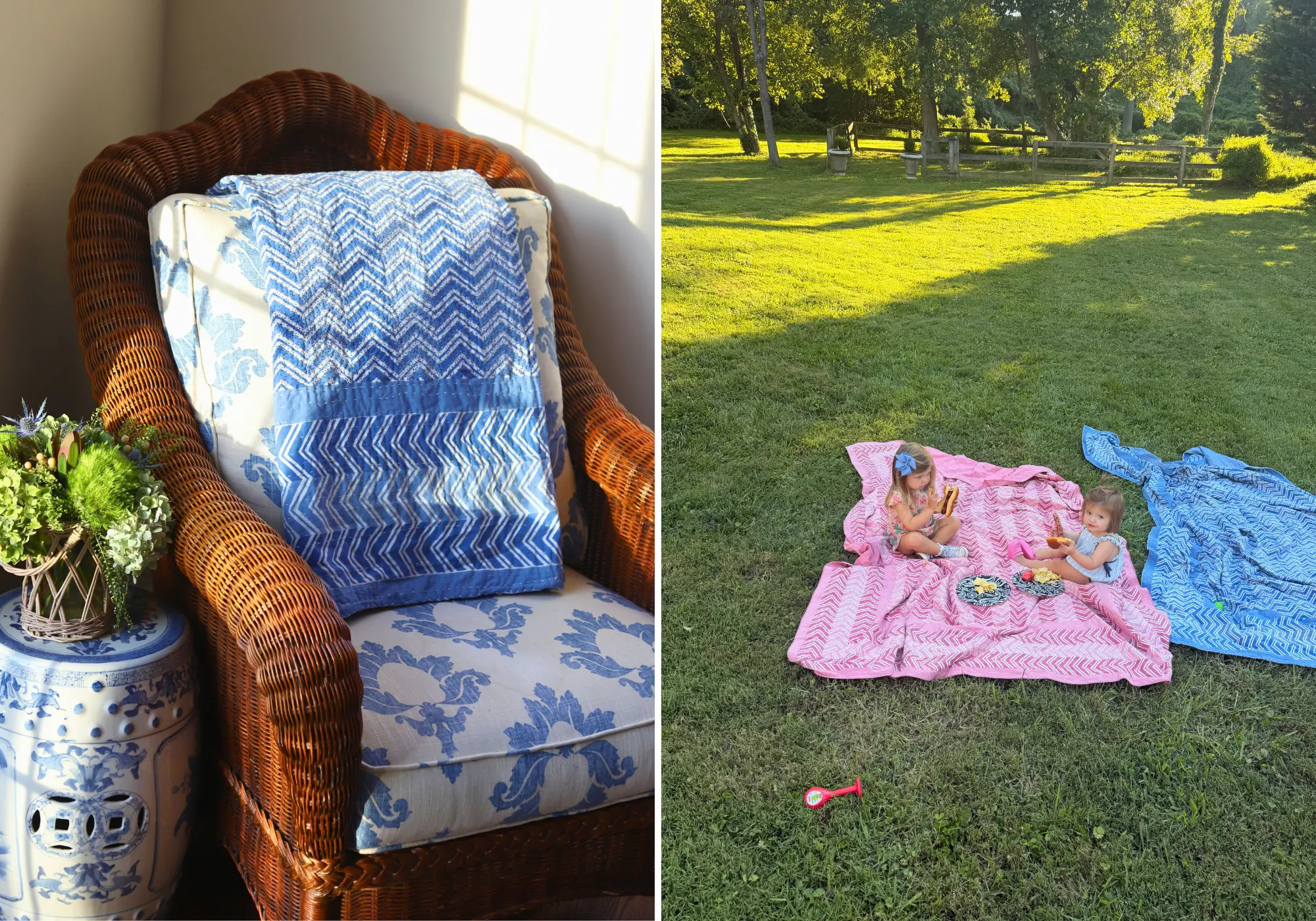
Q: We love the idea of pieces that can move around a home and take on different roles. You’ve shown just how versatile our quilts can be – using Samara for an outdoor tablescape and Chevron for a picnic, in your daughter’s nursery and on an accent chair in your dining room. How much does versatility factor into what you buy, and are there any pieces do you find yourself constantly repurposing?
A: I love a piece that has multiple functions, and I find myself pulled more and more in that direction as I’ve gained such a greater appreciation for beautiful practicality. I have a collection of silver and crystal bowls that I have scattered all over my house and their purpose is always evolving. One day they are a candy dish, the next they are a catchall for my jewelry, the next a vessel for olives on a charcuterie board, you get the idea. I think movement in a home is always a good thing, and helps you focus on having things you love and are excited to use in lots of different ways. I also think that using items in perhaps unexpected ways (like a quilt as a tablecloth), adds so much richness and creativity to a space.
Making an outdoor meal feel special without making it fussy
“I love table linens outdoors. I think it instantly makes an outdoor table feel polished and like an extension of the home, rather than a municipal picnic table”.
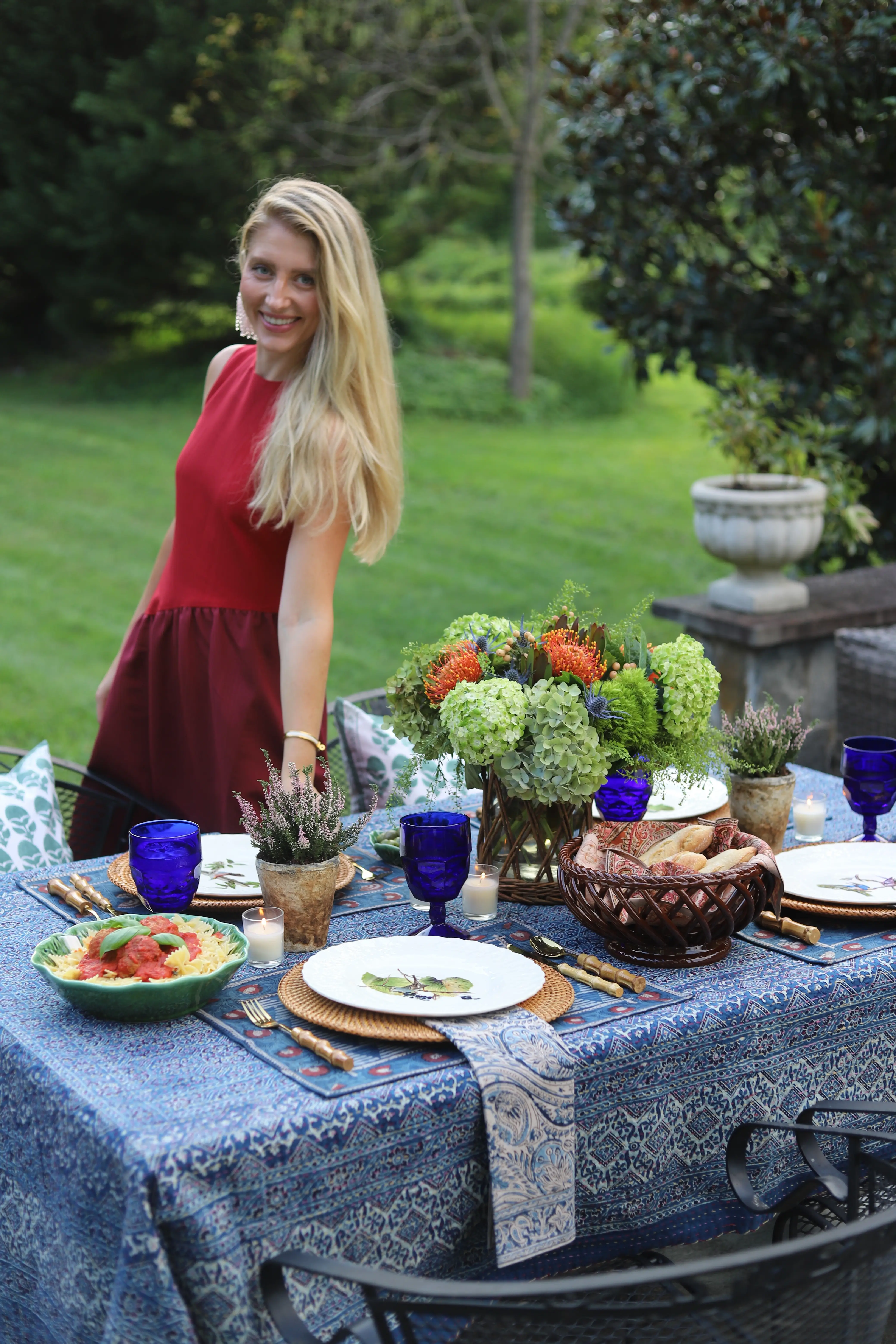
Q: There’s something especially charming about taking beautiful linens outside. What’s your approach to making an outdoor meal feel special without making it fussy?
A: I love table linens outdoors. I think it instantly makes an outdoor table feel polished and like an extension of the home, rather than a municipal picnic table. I also like to use real dishes if I can help it, although if I have more than twelve guests we usually resort to paper plates (I’m only human, after all). I think part of helping it not feel too fussy, is to have an attitude of utility for your things. Having beautiful dishes and glassware and table linens is great, but not if you are too afraid to ever use them. Life is short, use the good china (even for the little things).
Mixing different prints and aesthetics feels completely natural together
“I’ve started half-joking that my design philosophy for just about anything is the bridal rule: something old, something new, something borrowed, something blue. I have always loved the intricacies and beauty of Indian textiles, so they make many appearances as my “something borrowed”.
.webp)
Q: Your outdoor tablescape brings together such a mix of textile traditions – indigo dyeing, hand-stitched quilts, block prints, and kalamkari – yet it all feels completely natural together. What’s your rule of thumb for mixing different prints and aesthetics?
A: I think it’s important to have a mix of scale when combining prints. If every print is either very large or very small, or too similar, it starts to feel overwhelming and monotonous. As for mixing aesthetics, I think it’s imperative. I have a hard time when something feels too “all one thing”. There isn’t anything very interesting about that. I’ve started half-joking that my design philosophy for just about anything is the bridal rule: something old, something new, something borrowed, something blue. In design, I like to translate “something borrowed” as something borrowed from another region or part of the world. I have always loved the intricacies and beauty of Indian textiles, so they make many appearances as my “something borrowed” haha.

Leave a Comment